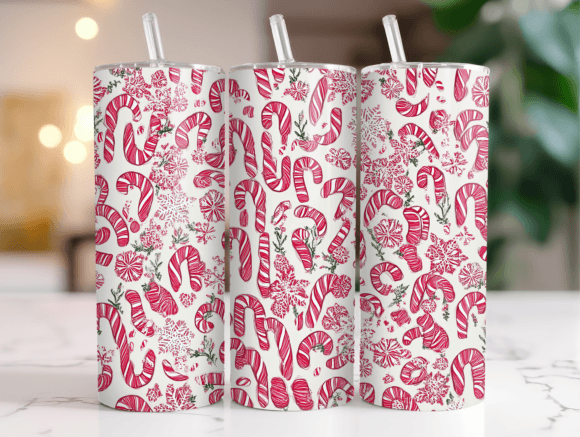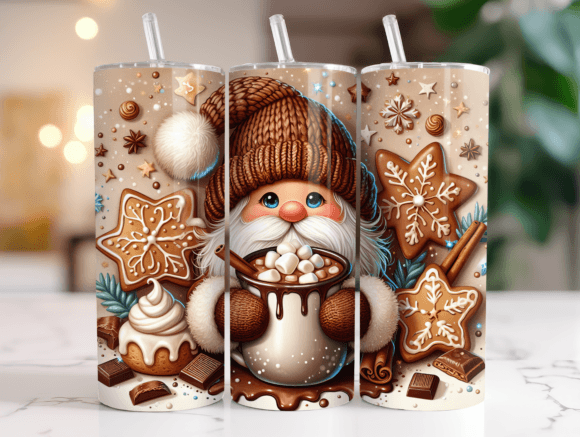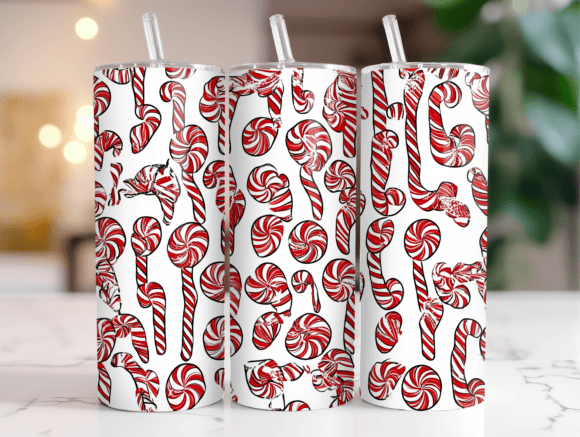
Candy Cane Peppermint 20oz Tumbler Wrap
First Impressions: Festive, Clean, and Purpose-Built
When I opened the Candy Cane Peppermint 20oz Tumbler Wrap file, my first thought wasn’t “cute holiday graphic”—it was “this has rhythm.” The swirl of the candy cane, the balanced peppermint swirl, and the subtle weight distribution tell me this wasn’t just AI-generated and dropped into Photoshop. Someone edited with intention: smoothing vector edges, adjusting contrast between red and white zones, and ensuring the wrap flows *around* a cylinder—not just across a flat rectangle. That matters. Because while it’s labeled a tumbler wrap, I immediately saw it stitched onto a heavyweight cotton tote—looped cleanly along the side seam—and on a relaxed-fit sweatshirt cuff, where the curve echoes the wrist’s natural bend.
Where It Shines (and Where It Needs a Pause)
The Candy Cane Peppermint 20oz Tumbler Wrap thrives in medium-to-large embroidery projects where clarity and joyful recognition are priorities. Think: embroidered baby onesies (on the chest or back), aprons for holiday baking kits, tea towels sold at craft fairs, or pillow covers for seasonal home decor. Its bold contrast and generous negative space make it forgiving on textured fabrics like terry cloth or looped cotton—no tiny gaps getting lost in pile. As a machine embroidery design, it translates well to satin stitch borders and smooth fill stitch interiors, especially when paired with high-contrast thread colors (like deep burgundy on cream or bright white on navy).
But—and this is critical—it’s not a one-size-fits-all embroidery file. On stretchy knit fabric (like a lightweight crewneck tee), the wrap’s horizontal flow can distort if hooping isn’t precise or stabilizer isn’t layered correctly. And on dark fabric? Test your white thread brightness first. Some “white” polyester threads dull on black or charcoal backgrounds, muting the peppermint’s crispness. Also, avoid placing it near curved seams on caps or beanies—the original layout assumes a straight, vertical surface. If you’re adapting it for a curved cap front, expect to adjust spacing and possibly simplify interior detail manually.
A Real Project Moment: Stitching It Into a Holiday Gift Bundle
Last week, I prepped a small-batch holiday gift set for a local boutique: three items—a linen tea towel, a canvas tote, and a fleece-lined baby blanket. I used the Candy Cane Peppermint 20oz Tumbler Wrap as the unifying motif. On the towel, I centered it mid-panel—no hooping drama, clean fill stitch coverage, and the red popped beautifully against natural flax. On the tote, I rotated it 90° and placed it vertically along the strap seam; the repetition felt intentional, not repetitive. But on the baby blanket? I paused. The design’s width was perfect, but the original file’s density felt heavy for delicate fleece backing. So I reduced stitch density by 15% in my editing software and added light tear-away stabilizer underneath. Result: soft, dimensional, and safe for infant skin—no stiff patches or scratchy underlayers.
What Customers Notice (and Why It Matters)
People don’t buy “embroidery files.” They buy confidence, charm, and handmade authenticity. When customers see the Candy Cane Peppermint 20oz Tumbler Wrap stitched on a product, they register warmth before they register detail. That’s its strength: instant holiday mood, zero ambiguity. For Etsy sellers and small shop owners, that emotional resonance lifts perceived value—especially on personalized gifts. A monogrammed sweatshirt with this wrap beside the pocket feels curated, not generic. It also supports brand consistency across product lines: same motif, different applications, unified seasonal voice.
Designer Notes You’ll Actually Use
- Always test on scrap fabric first—especially if stitching on textured, stretchy, or dark materials. What looks sharp on screen rarely behaves the same under needle tension.
- Check thread color contrast in natural light, not just under studio LEDs. Red thread on red fabric? It disappears. White thread on off-white linen? Often reads as faint gray.
- Review stitch density before hooping. Dense fills hold up better on stable fabrics (denim, twill) but can pucker thin cotton or gauze. Lighten where needed.
- Confirm hoop size compatibility. This design was built for standard 4x4 or larger hoops. Don’t force it into a 3x3 unless you’re willing to crop or resize thoughtfully.
- Inspect small details at 200% zoom: Are peppermint swirl endpoints clean? Is the candy cane stripe edge sharp or pixelated? If it’s AI-derived, minor jaggedness may need manual smoothing.
- Test black-and-white mockups before finalizing listings. Many buyers browse in grayscale mode or print catalogs—does the design retain legibility?
- Use appropriate stabilizer: Cut-away for knits, tear-away for stable wovens, and fusible + tear-away for lightweight linens.
- Verify licensing terms before selling finished products or reselling the digital embroidery file. This listing says it’s a digital file only—confirm whether commercial use is permitted for your business model.
Final Thought: A Thoughtful Tool, Not Just a Trend
The Candy Cane Peppermint 20oz Tumbler Wrap isn’t flashy. It doesn’t try to be “viral.” It’s a reliable, well-structured graphic that respects both the machine and the maker. Used intentionally—as part of a cohesive holiday collection, a boutique merchandise line, or a heartfelt personalized gift—it adds warmth without overwhelming. For embroidery designers and craft business owners, that balance is rare. It’s not about how many times you can use it—but how well it serves each project, each customer, and each stitch.